PS Furniture Revolution® Folding Tables – Overview

Technical Overview: PS Furniture Revolution® Folding Tables

The Revolution® Folding Tables manufactured by PS Furniture are engineered commercial tables designed for environments requiring frequent setup, reconfiguration, and storage. Their design focuses on reducing weight while maintaining structural durability, primarily through the use of a composite tabletop core and specialized edge construction.

Tabletop Construction

A defining characteristic of the Revolution® table line is the engineered composite tabletop core. Unlike conventional folding tables that typically use particleboard or MDF cores, this design uses a lightweight composite panel intended to reduce overall mass while maintaining structural rigidity.

The tabletop mass is approximately 1.7 lb/ft², which is significantly lighter than traditional particleboard or MDF table cores. This reduction corresponds to roughly a 66% decrease in weight compared with many conventional laminate folding tables of similar size.

Reducing the tabletop weight improves handling during room setup, teardown, and storage while still providing structural strength appropriate for commercial and institutional environments.

Surface Materials

The tabletop surface consists of high-pressure laminate (HPL) bonded to the composite core. High-pressure laminate is widely used in institutional furniture due to its resistance to abrasion, impact, and staining.

Laminate surfaces are typically available in multiple finishes and colors, allowing the tables to integrate with a variety of interior designs while maintaining a durable work surface.

The table edge profile is approximately 30 mm thick, contributing to structural rigidity and providing a finished commercial appearance.

Edge Construction

Revolution® tables incorporate a proprietary edge system called MAXX Edge®. This edge is formed by pouring urethane around the perimeter of the tabletop where it chemically bonds with the laminate surface and internal core.

This manufacturing process creates a seamless edge interface without exposed seams or joints. From an engineering perspective, the edge system is designed to:

  • Improve resistance to impact damage
  • Reduce the likelihood of edge delamination
  • Eliminate small seams where moisture or debris could accumulate

The edge can be produced in different profiles, including eased (rounded) and linear (square) configurations.

Folding Base Design

The base assemblies are constructed from tubular steel legs with a folding mechanism designed to allow the legs to collapse beneath the tabletop for storage.

Many models include a positive-locking mechanism that secures the legs in either the open or folded position. In some configurations, a push-button release mechanism is used to engage or disengage the folding action.

Available base configurations include:

  • T-Leg folding base
  • Arched T-Leg folding base
  • Square-leg folding base
  • Flip-top nesting base (optional)

In flip-top configurations, the tabletop rotates vertically, allowing multiple tables to nest together for compact storage.

Footing and Mobility Options

The table bases may include several mobility and leveling features, such as:

  • Recessed transport wheels on one side of the base
  • Adjustable leveling feet for uneven floors
  • Dual levelers or fixed feet, depending on the model

These features allow tables to be rolled short distances during room setup while maintaining stable support during use.

Optional Functional Components

Several optional components can be integrated with the table system to support modular configurations:

  • Ganging hardware for connecting tables together
  • Modesty panels for privacy in training or classroom settings
  • Integrated power modules for conference and meeting applications
  • Vertical storage carts for transporting and storing multiple tables

Storage systems can allow multiple tables to be stored vertically, reducing the floor space required when the tables are not in use.

Available Sizes

Revolution® folding tables are manufactured in several standard commercial sizes, including:

  • 18″ × 60″
  • 18″ × 72″
  • 24″ × 72″
  • 30″ × 72″
  • 30″ × 96″

Standard table height is approximately 30 inches, which aligns with common meeting and workspace furniture dimensions.

Depending on size and base configuration, table weights typically range from approximately 29 pounds to more than 50 pounds.

Applications

Due to the combination of reduced weight and modular configuration, Revolution® folding tables are frequently used in environments where furniture must be moved or reconfigured regularly, such as:

  • Training rooms
  • Conference and meeting spaces
  • Educational classrooms
  • Event and banquet facilities
  • Multi-purpose community spaces

Their design allows staff to reposition tables efficiently while maintaining durability suitable for repeated commercial use.

Product Link

For complete specifications, configuration options, and product details, visit the official product page:
https://www.psfurniture.com/product/revolution-folding-tables-2/


PS Furniture MÜM™ Perch Stool Review

PS Furniture MÜM™ Perch Stool Review: A Practical Look at This Modular Seating Option

If you’re looking for flexible seating that works well in modern offices, classrooms, libraries, or collaborative spaces, the MÜM™ perch stool from PS Furniture is worth considering. It’s a modular perch designed for short, active sitting—think quick meetings, breakout areas, or touchdown spots—rather than all-day desk work. In this review, we’ll break down its design, comfort, practicality, and where it shines (or doesn’t).

Design and Versatility

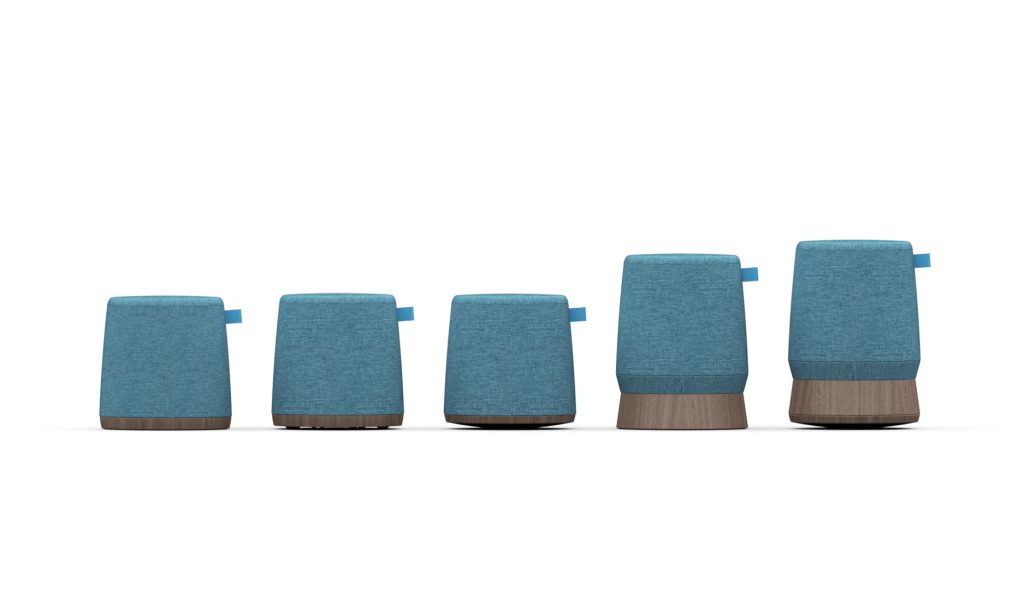
The standout feature of the MÜM™ is its modularity. You get one comfortable upholstered seat (about 16.7 inches wide) that pairs with interchangeable hardwood bases in three heights—Short (around 18-19 inches), Mid (20-21 inches), and Tall (23-25 inches)—and three styles:

  • Flat: Stationary for stable setups
  • Rock: Gentle rocking motion for subtle movement
  • Roll: Casters for easy rolling across floors

This makes it easy to adapt to different table heights or room layouts. It’s great for dynamic spaces where furniture gets moved around often, like agile offices or active learning classrooms. However, once you choose a base, there’s no further height adjustment—it’s set at purchase.

Comfort and Ergonomics

The seat has layered memory foam cushioning, which feels supportive for brief sits—much better than a basic bar stool. You can choose from various upholstery options, including durable vinyls, graded fabrics (like Knoll textiles), or even supply your own material (COM) for a perfect match.

The Rock base adds a nice touch of movement, which can help with focus during short sessions or for people who like to shift positions. Tall models have a slight flare at the base for resting your feet. That said, it’s not a full ergonomic chair—no backrest, arms, or lumbar support—so it’s best for intermittent use rather than long hours.

Build Quality and Mobility

These stools are lightweight yet sturdy (with a 300 lb weight capacity), and every one comes with a built-in leather handle in your choice of colors—super handy for grabbing and moving them quickly. The Roll bases glide smoothly on most surfaces, and the overall build feels durable with solid hardwood bases (available in light, dark, or black finishes, though black has minimum order requirements).

Aesthetics and Customization

The design is clean and minimalist—rounded shapes that blend into contemporary interiors without overpowering the room. With plenty of fabric and handle color options, it’s straightforward to coordinate with your existing decor.

What We Like (Strengths)

  • Highly configurable for different spaces and needs
  • Encourages light movement with the Rock option
  • Easy to move and reconfigure thanks to the handle and lightweight design
  • Good range of fabrics and finishes for customization

Things to Consider (Limitations)

  • Ideal for short perching, not suited as a primary all-day chair
  • Some options (like black bases) require larger orders and longer lead times
  • Limited independent reviews available—most feedback comes from product listings
  • Plenty of similar perch stools on the market, so compare pricing and features

Bottom Line: The PS Furniture MÜM™ is a solid, thoughtful choice if you’re furnishing flexible, people-focused spaces. It promotes movement and adaptability without fuss, making it a practical addition to modern work or learning environments. If that matches your needs, it’s definitely one to check out.

For full specs, pricing, and options, visit the official page: PS Furniture MÜM™ Product Page


Analysis of PS Furniture’s Scissor® Tables

Analysis of PS Furniture’s Scissor® Tables: Design and Applications

Introduction
Space constraints and safety concerns in furniture deployment are persistent challenges in environments like offices, healthcare facilities, and educational institutions. PS Furniture’s Scissor® Tables, with their fold-in-half design and integrated safety features, aim to address these issues through innovative engineering. This analysis evaluates the tables’ design, functionality, and suitability for space-limited settings, comparing their performance to industry standards and identifying potential limitations.

Design and Engineering
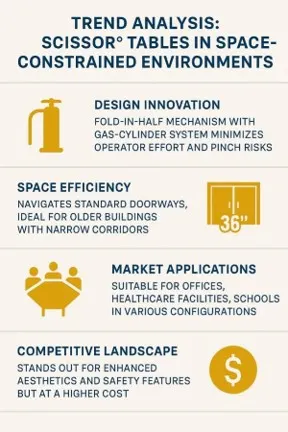
The Scissor® Tables feature a fold-in-half mechanism powered by a patented gas-cylinder system, likely nitrogen-based, which enables smooth folding and unfolding with minimal operator effort. This design contrasts with traditional hinge-based folding tables, which often require greater force and pose pinch risks. The tables are constructed with lightweight materials—potentially aluminum or high-strength polymer frames paired with Wilsonart laminate surfaces—balancing portability and durability.

While the gas-cylinder system enhances usability, its long-term durability and maintenance requirements remain unclear. Data on load capacity, stress testing, or the lifespan of the cylinders would strengthen claims of reliability in high-use settings. Compared to simpler mechanical hinges, the gas-cylinder mechanism may increase manufacturing costs, a factor facilities managers must consider against budget constraints.

Space Efficiency
The Scissor® Tables are designed to navigate standard 36″ doorways, addressing a key limitation of traditional fold-and-roll cafeteria tables, which often require 48″ or wider clearances. This makes them suitable for older buildings or facilities with narrow corridors, such as hospitals or schools. When folded, the tables likely have a compact footprint (e.g., approximately 48″ x 24″ x 10″ for a rectangular model), though exact dimensions are not provided. However, in extremely confined storage areas, such as small closets, the folded size may still pose challenges. A comparative analysis of folded and unfolded dimensions against competitors like Lifetime Products or KI Furniture would clarify their space-saving advantage.

Safety and Ergonomics
The gas-cylinder folding mechanism eliminates pinch points by controlling the folding motion, reducing injury risks in line with OSHA guidelines for workplace safety. This is particularly relevant in high-traffic environments like healthcare facilities, where staff safety is paramount. The design also prevents debris accumulation between table halves when folded, enhancing hygiene in settings requiring frequent cleaning, such as hospitals or food service areas.

However, the maintenance needs of the gas-cylinder system, such as potential pressure loss over time, are not addressed. Compared to traditional hinge-based tables, the Scissor® Tables likely offer ergonomic benefits, with setup times estimated at 30–45 seconds for a single operator (versus 1–2 minutes for bulkier designs). Quantitative data on weight (e.g., 40–60 lbs compared to 80–120 lbs for cafeteria tables) would further validate claims of reduced operator strain.

Configurations and Applications
The Scissor® Tables are available in eight configurations to accommodate diverse use cases:

  • Round: 60″ (suitable for small group discussions)
  • Hexagon: 60″ (ideal for collaborative settings)
  • Square: 48″ x 48″ (compact, but limited for larger groups)
  • Oval: 48″ x 79″ (effective for training or boardrooms)
  • Rectangle: 30″ x 72″, 30″ x 96″, 48″ x 72″, 48″ x 96″ (versatile for conferences or classrooms)

This range supports varied room layouts, from break rooms to multipurpose spaces. The oval and larger rectangular options maximize seating capacity, while the square table may be less practical for gatherings exceeding 4–6 people. Aesthetic customization, including Wilsonart laminates and logo sublimation, ensures visual consistency across professional environments. However, highly irregular spaces or specialized needs (e.g., extreme weight capacities) may require custom solutions not offered in this lineup.

Comparative Analysis
Compared to competitors like Lifetime Products or KI Furniture, Scissor® Tables stand out for their gas-cylinder mechanism and aesthetic flexibility. Lifetime’s folding tables, for example, prioritize affordability but often lack advanced safety features or professional finishes. KI Furniture offers similar portability but may not match the Scissor® Tables’ doorway compatibility or customization options. However, competitors’ lower-cost models may appeal to budget-conscious buyers, potentially at the expense of durability or safety. A lifecycle cost analysis, factoring in maintenance and replacement frequency, would provide clearer insight into the Scissor® Tables’ value proposition.

Conclusion
PS Furniture’s Scissor® Tables offer a robust solution for space-constrained environments, leveraging a gas-cylinder folding mechanism and lightweight construction to enhance portability and safety. Their diverse configurations and aesthetic options make them suitable for offices, healthcare, and educational settings. However, the higher cost of the gas-cylinder system and lack of published data on load capacity, maintenance, or long-term durability warrant further scrutiny. Facilities managers should weigh these factors against operational needs and budget constraints. Future iterations could explore motorized folding mechanisms or sustainable materials to align with emerging industry trends.